

 Français
This article is based on the remarks gathered from Benjamin André, Strategic Director of Twake at LINAGORA.
At the latest FOSDEM in Brussels, Benjamin André (Strategic Director of Twake, for LINAGORA) shared a disturbing observation: Europe has never had so many high‑quality collaborative digital solutions… yet its reliance on Microsoft 365 keeps strengthening. How can we explain this paradox? Why does the argument of “there are no alternatives” continue to dominate strategic decisions, even though the open‑source and European ecosystem has reached an unprecedented level of maturity? The answer does not lie solely in technology, but in the way we think, or rather, have not yet thought, about the notion of a work platform.
1. A Dependency That Has Become Critical
European dependence on Microsoft 365 is no longer just a technical or budgetary issue. It has become strategic, industrial, and profoundly political.
Over the years, Microsoft’s collaborative suite has become embedded in daily practices: email, documents, remote meetings, file sharing, work organization. This omnipresence has created a progressive lock‑in effect. The more the ecosystem is woven into internal practices, the harder it becomes, financially, technically, and human‑wise, to pull out. Migrations are no longer seen as projects but as risks.
This lock‑in raises not only cost questions. It also challenges data sovereignty, which is subjected to extraterritorial legal frameworks, and the ability of European organisations to control their digital tools in the long term. Product roadmaps, integration choices, and technological directions are decided elsewhere while permanently structuring local information systems.
Microsoft 365 has thus become a de‑facto infrastructure. In this context, one sentence keeps echoing in tenders and strategic meetings: “There is no alternative.” Really?
2. Mature Alternatives… Yet Fragmented
If we look at each need separately, the landscape has radically changed. Europe and the open‑source ecosystem now offer robust solutions for email, videoconferencing, collaborative document editing, and file sharing. These tools have improved in usability, performance, and large‑scale deployment capability. They are no longer experimental; they are used in production in demanding environments.
Adding a major accelerator: Artificial Intelligence. AI reshuffles the cards by allowing smaller teams to quickly integrate advanced features. Where size once was a decisive advantage, it can now become a hindrance when architectures are too heavy and evolution cycles too slow. Consequently, the functional gap between large proprietary suites and alternatives is narrowing much faster than imagined.
Nevertheless, decisions rarely swing. The reason is simple: a set of good tools does not automatically constitute a coherent work platform. The solutions exist, but they are still too often perceived (and sometimes designed) as independent bricks. They coexist more than they cooperate.
That is precisely where the “there is no alternative” discourse finds fertile ground. Not because the tools are insufficient, but because they do not yet form a readable, integrated whole in the eyes of decision‑makers.
3. The Real Lock‑In: Lack of Orchestration
A common analytical mistake is to think that a simple SSO is enough to turn a collection of applications into a platform. In reality, linking tools through a common authentication does not create a unified work experience. You end up with a catalog of services, not an integrated environment.
The strength of large platforms lies less in the isolated quality of each brick than in their orchestration. Identities, rights, notifications, documents, and workflows flow smoothly from one service to another. The user does not feel they are constantly switching tools; they operate within a continuum.
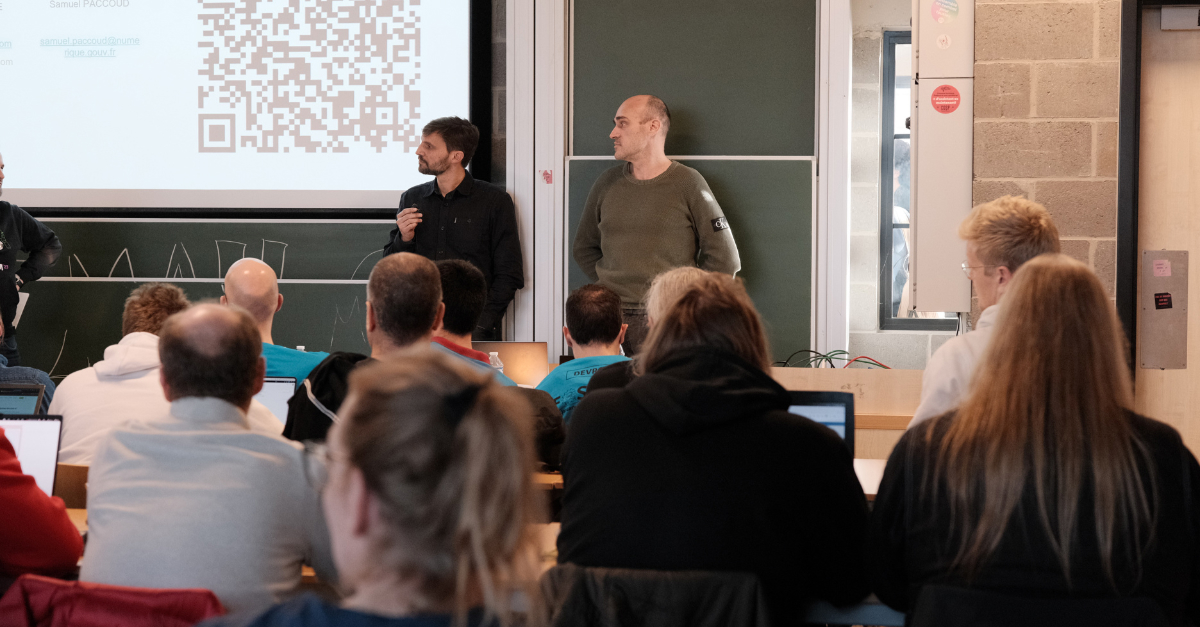
Without this orchestration layer, alternatives appear more fragmented, thus seemingly more complex to deploy at scale. This observation fueled the reflection presented at FOSDEM 2026 by Benjamin André for LINAGORA and Samuel Paccoud, director of the Digital Suite driven by DINUM. From the integration work of the Digital Suite within the Twake environment, an idea emerged: what the ecosystem lacks is not a new application, but an orchestration standard.
Open Buro is born from this conviction. Its goal is not to create yet another proprietary platform, but to lay the foundations of an open standard that allows independent services to assemble into a truly coherent workplace. Each brick can continue to exist, innovate, and evolve autonomously while fitting into a common framework of integration and functional interoperability.
The approach is accompanied by a commitment to open governance, carried by a foundation, to prevent capture by a single actor. The ambition mirrors that of web standards: to create a shared space where different players can build together, rather than being locked in proprietary silos.
With Open Buro, the challenge is therefore not to reproduce a closed, integrated model, but to invent a federated, interoperable, and durable alternative capable of fostering a genuine European workplace ecosystem.
Conclusion
The ecosystem of alternatives to M365 is rich but only provides partial and fragmented answers. The question now is whether we can collectively orchestrate our applications to deliver a “smart platform experience” that serves our users’ productivity.
It is a collective challenge that goes beyond vendors, integrators, and administrations acting in isolation. It requires a new standard, shared governance, and a long‑term vision of European digital sovereignty.
The work underway around Open Buro represents a concrete first step in that direction. The discussion launched at FOSDEM 2026 has already begun to gather new actors and spark collaborations, public bodies, CIOs, vendors.
The full video of the presentation can be found ici

