

 Français
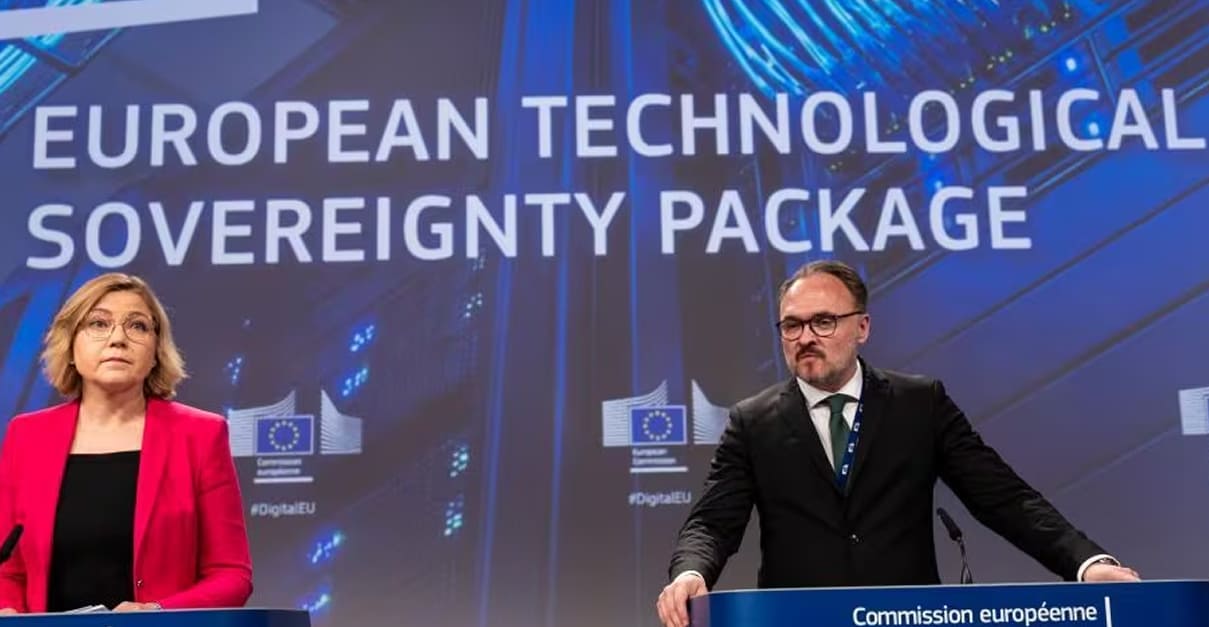
What if June 3 2026 becomes one of the most important dates in European digital history?
Yesterday, the European Commission unveiled its technology sovereignty package together with an ambitious open‑source strategy.
Beyond a mere institutional announcement, it marks a real change of course. For years, Europe has accepted a heavy dependence on technologies designed and operated outside its borders.
Today it declares a new ambition:
Dependence is not a fatality. Numerical sovereignty becomes a strategy.
Through this strategy, the European Union aims to reduce reliance on non‑European technologies, strengthen the security and interoperability of digital infrastructures, and support innovation in key areas such as cloud, AI, cybersecurity and semiconductors.
The initiative seeks to create a more resilient, competitive and sustainable European digital ecosystem, benefiting administrations, businesses, developers and citizens alike.
As our President Alexandre Zapolsky emphasizes:
« Open‑source software allows Europe to pool its investments, share innovation, reinforce its technological mastery and build lasting, auditable and reusable digital infrastructures. The fact that the European Commission now envisions direct support mechanisms for actors developing these digital commons constitutes a major breakthrough. Supporting open source is not about endorsing an ideology; it is about investing in the strategic infrastructure of the 21st century.»
For those who have championed this vision for a long time, this moment carries special resonance. At LINAGORA, we have defended this conviction for 26 years.
Europe already possesses the talent, skills and infrastructure needed. It now appears to be taking a clear direction.

