


 Français
 Tunisie
The question of who truly controls a company's information is no longer just a matter for lawyers or IT teams. Every customer file, contract, or AI model trained on internal data can, depending on where it is hosted and who operates it, fall under the authority of a foreign state. For a Paris-based SME or a CAC 40 group, this reality has very concrete consequences. It affects contracts, compliance, security, and trust.
In 2026, data sovereignty has become a C-level priority. Geopolitical tensions have highlighted the fragility of digital supply chains. The rise of generative AI has multiplied the flow of sensitive information toward services often operated outside Europe. European regulations have also grown stricter.
For a long time, we have defended a simple conviction: an open, transparent, and controlled digital ecosystem is not a luxury reserved for public administrations. It is a condition of freedom for any organization that wishes to remain in control of its future. Understanding this concept, its implications, and the available levers is now essential for making informed decisions.
Definition and fundamentals of data sovereignty
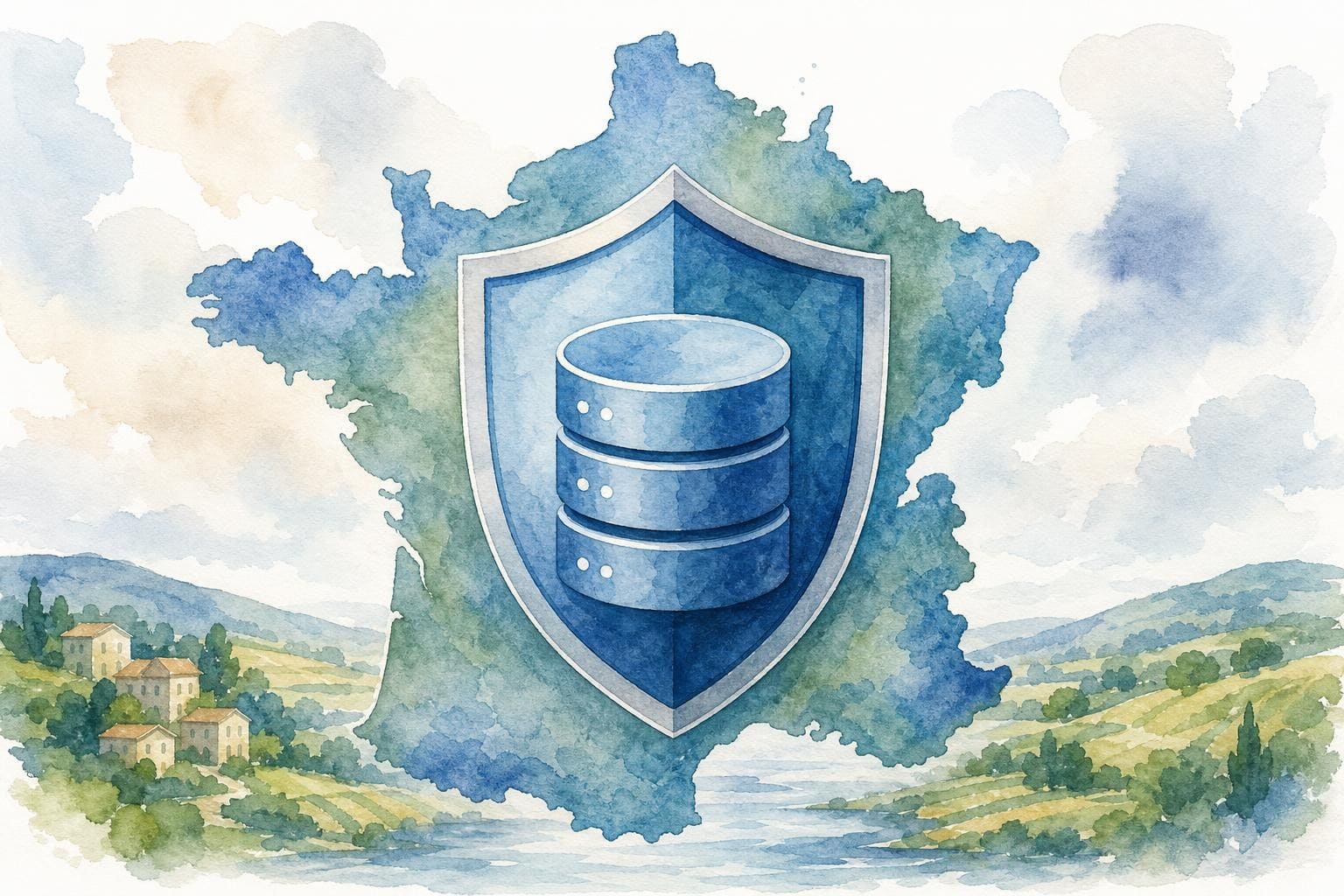
What is data sovereignty? It is the principle that data is subject to the laws and governance structures of the country or region where it is collected, stored, or processed. For an organization, this means retaining the ability to decide who can access it, under what conditions, and under which legal framework. This control must be real, not merely contractual.
This concept rests on three pillars. The first is legal: determining which laws apply to the information. The second is technical: controlling the infrastructure, encryption keys, and software that handle this information. The third is operational: being able to switch providers, retrieve files, or audit processing without depending on a third party’s goodwill.
A company may legally own its data without being truly sovereign over it. This is the case if a foreign provider can be compelled to hand over the data to a third-party authority. It is also the case if a proprietary format prevents any migration.
The distinction between sovereignty, protection, and localization
These three terms are often confused, though they cover different realities:
- Data protection concerns the rights of individuals, such as consent, access, or erasure. In Europe, it is governed by the GDPR.
- Data localization simply refers to the geographic location of servers. A data center in Paris constitutes French localization.
- Data sovereignty encompasses the two previous notions but adds a decisive question: which law truly applies, and who holds effective control over the infrastructure?
A server located in France but operated by a subsidiary of a U.S. group illustrates this nuance. The data is localized in Europe but not necessarily shielded from extraterritorial laws. Localization is therefore a necessary condition, but never a sufficient one.
The global legal and regulatory framework
Each major digital power has developed its own doctrine. The European Union prioritizes the protection of fundamental rights and market regulation. The United States favors access by its authorities to information held by its companies, wherever it may be. China imposes strict localization and extensive state control. Other countries, such as India or Brazil, have adopted data protection laws partly inspired by the European model.
For a French company working with international partners, this landscape creates permanent friction zones. The same dataset may simultaneously fall under multiple jurisdictions with contradictory requirements. Mapping these obligations is the first step in any sovereign strategy.
The influence of the GDPR in Europe and internationally
Implemented in May 2018, the General Data Protection Regulation (GDPR) has profoundly transformed practices. Its penalties can reach 4% of global annual revenue, making compliance a governance issue in its own right. Its scope is extraterritorial: any organization processing data of European residents must comply.
The GDPR has also served as a reference for many foreign legislations. This phenomenon is often referred to as the "Brussels Effect." It has been complemented by other European texts, such as the Data Act and the AI Regulation. Together, these texts establish a coherent framework that makes transparency and control over data flows obligations,not mere options.
The Cloud Act and U.S. extraterritorial laws
Adopted in 2018, the Cloud Act authorizes U.S. authorities to require providers subject to U.S. law to disclose data under their control, even when stored outside the United States. Section 702 of the FISA further strengthens these access capabilities in the field of intelligence.
These texts directly conflict with the GDPR. In 2020, the Schrems II ruling by the Court of Justice of the European Union invalidated the Privacy Shield for this very reason. The subsequent transfer framework remains contested by many legal experts. For a European company, entrusting strategic information to an actor subject to these laws entails a legal risk that no contractual clause can fully neutralize.
Strategic stakes for modern businesses
Digital sovereignty is not an abstract concern. It determines a company’s ability to protect its know-how, respond to public tenders, and reassure its partners. In many sectors,such as healthcare, defense, energy, or finance, it has become an explicit eligibility criterion.
French public procurers increasingly demand guarantees regarding hosting and the nationality of operators. Large corporations apply similar requirements to their subcontractors. An SME unable to demonstrate control over its processing chain risks losing contracts, even if its technical offer is excellent.
Cybersecurity and the prevention of industrial espionage
A company’s data represents a significant portion of its value. Design plans, formulas, commercial strategies, or prospect files: their leakage can wipe out years of investment. Yet, the legal access of a foreign power to this information constitutes a form of exposure as real as a cyberattack.
A sovereign approach reduces this exposure. It limits intermediaries, ensures encryption keys remain under the organization’s control, and favors software whose code can be audited. Open-source software plays a central role here, as open code cannot conceal a backdoor indefinitely.
Customer trust and brand image
European citizens are increasingly attentive to the fate of their personal data. A company able to assert, with proof, that its customers’ data never leaves Europe and does not fall under any foreign jurisdiction has a strong commercial argument.
This transparency has become a marker of responsibility. It aligns with the CSR commitments already made by many organizations: digital ethics follows the same logic as environmental ethics. A brand that commits to this builds a lasting relationship of trust, difficult for competitors to replicate.
Technological independence from cloud giants
The European cloud market is largely dominated by a handful of U.S. players. This concentration creates a double dependency. The first is legal, as seen with the Cloud Act. The second is economic: when all of a company’s applications rely on proprietary services, migration becomes costly, even impossible. The provider can then modify its prices or terms of use without any real alternative.
This lock-in effect is often underestimated at the time of signing. It becomes apparent later, when volumes have increased and teams have grown accustomed to tools that cannot be replaced without a complete overhaul. Regaining control therefore requires a long-term vision and architectural choices made from the outset.
The role of sovereign cloud and local infrastructure
In France, the SecNumCloud qualification, issued by ANSSI, is the most demanding reference. It imposes strict technical criteria, as well as guarantees of immunity against extraterritorial laws: the provider must not be subject to any non-European legal jurisdiction. The French state’s "cloud at the center" doctrine has reinforced its importance for sensitive administrative data.
Several French and European hosting providers now offer qualified, or in the process of being qualified, services. Their catalogs have expanded significantly. Sovereign cloud is no longer synonymous with functional compromise: it now offers a credible alternative for most professional uses.
The Gaia-X initiative and European digital autonomy
Launched in 2020 at the initiative of France and Germany, Gaia-X aims to establish common standards for a federated, interoperable, and transparent data ecosystem. The goal is not to build a European hyperscaler but to define trust rules that any provider must respect to participate in this ecosystem.
The project has sparked debates, particularly regarding the place granted to non-European giants among its members. Nevertheless, it has enabled the emergence of sector-specific data spaces in industry, mobility, and healthcare. We see it as an important step toward shared digital commons built on European values.
Technical challenges in implementing sovereignty
Moving from intention to practice raises real difficulties. The first is technical legacy. Many organizations have migrated to proprietary cloud services over the past decade. Their applications depend on specific interfaces, managed databases, and integrated functions that must be replaced or rewritten. A poorly prepared migration can disrupt operations for months.
The second challenge is visibility. Few companies have a complete inventory of their data flows. SaaS tools adopted by business teams, often without IT validation, create a "shadow IT" that transfers information to servers whose location is unknown. A messaging app, video conferencing tool, or writing assistant can be enough to export confidential documents.
The third obstacle is skills. Operating a sovereign infrastructure, managing encryption keys, or maintaining open-source components requires qualified profiles. These profiles are in high demand in a tight job market. Medium-sized companies often struggle to recruit such expertise in-house.
Finally, performance and costs must be considered. Some advanced features remain more mature among major U.S. providers, particularly in high-performance computing. However, this gap is rapidly closing. A lean architecture, sized appropriately, often proves less costly than an oversized infrastructure with a hyperscaler. It is also more environmentally friendly.
These challenges are real, but none are insurmountable with a clear and progressive roadmap.
Best practices for ensuring control over your data
Ensuring control over your data is not decreed, it is built step by step. Here is the approach we recommend for organizations wishing to progress pragmatically:
- Map data and flows: Identify where information is located, who accesses it, which subcontractors are involved, and under which jurisdiction they operate.
- Classify data by sensitivity: Not all information requires the same level of protection. Trade secrets, health data, and personal data should be prioritized.
- Choose providers immune to extraterritorial laws: For critical data, favor SecNumCloud-qualified offers or European hosts without non-European controlling shareholders.
- Control encryption: Retain key management internally or with a trusted third party, so a provider can never read the data it hosts.
- Prioritize open standards and open-source software: They ensure code auditability, reversibility, and the absence of commercial lock-in.
- Negotiate reversibility clauses: Contracts must specify export formats, timelines, and costs for data retrieval.
- Train teams: Sovereignty also depends on daily choices, collaboration tools, file sharing, or AI assistant usage.
This approach is best managed over several quarters. The first quarter can focus on inventory and classification. The second can address the migration of the most sensitive data. The third can progressively replace collaboration tools, and the fourth can implement regular audits. The key is to progress measurably rather than waiting for a perfect solution that will never arrive.
The future of sovereignty in the age of artificial intelligence
Generative AI has profoundly changed the question. When an employee pastes a contract or source code into a conversational assistant hosted abroad, that information leaves the company’s perimeter. Depending on the terms of use, it may even be used to train future models. Sovereignty is no longer just about storage, it now extends to processing and inference.
The European AI Regulation, whose obligations are gradually coming into force, imposes greater transparency on training data and system risks. It paves the way for differently designed models: open, documented, and trained on datasets whose origins are known.
It is in this spirit that the OpenLLM-France community developed an open-source language model with 7 billion parameters, trained on 3,100 billion tokens. Its corpus gives significant weight to French and European languages, demonstrating that a high-performance model does not necessarily require excessive resources.
A more compact, optimized model, deployable on local infrastructure, keeps sensitive data under control. It also reduces the energy footprint of computation while offering a sovereign and accessible alternative.
We are convinced that the future of AI in Europe will rely on this combination: open and auditable models, deployed close to their uses, on controlled infrastructure. Data quality and architectural sobriety will matter more than the race for size. A truly sovereign AI is one whose functioning is understood, whose origins are known, and which can be run without depending on an external actor.
Toward a new global digital balance
Understanding what data sovereignty entails means accepting a simple idea: owning information is not enough, you must also retain control over it. The applicable law, infrastructure control, software openness, and contractual reversibility form an indivisible whole.
Europe has solid assets to build an alternative model. It can rely on a demanding regulatory framework, qualified hosting providers, initiatives like Gaia-X, and a dynamic open-source community. This model is based neither on isolation nor domination but on trust and cooperation around digital commons.
For businesses, the time to act is now. Every successful migration and every adopted open-source tool strengthens collective autonomy. The same goes for every locally deployed AI model. Assess your exposure today, identify your critical data, and take your first step toward a digital ecosystem you truly control.

