


 Français
The Matrix protocol is attracting growing interest among users who want to regain control over their digital communications. In the face of recurring scandals related to privacy and the centralization of major messaging platforms, the question of decentralization has become essential. Matrix presents itself as an open and federated alternative, often considered a credible open source solution, but does this promise hold up under closer scrutiny? The answer is nuanced, as Matrix’s decentralization relies on specific architectural choices that come with both remarkable strengths and concrete limitations. To help you understand whether this open source service truly meets your expectations in terms of digital sovereignty, we will examine its technical functioning, compare it with other systems, and analyze the remaining challenges. Whether you are a system administrator, an IT manager, or simply curious, this analysis will give you the keys to assess the real level of decentralization offered by Matrix.
The foundations of Matrix architecture
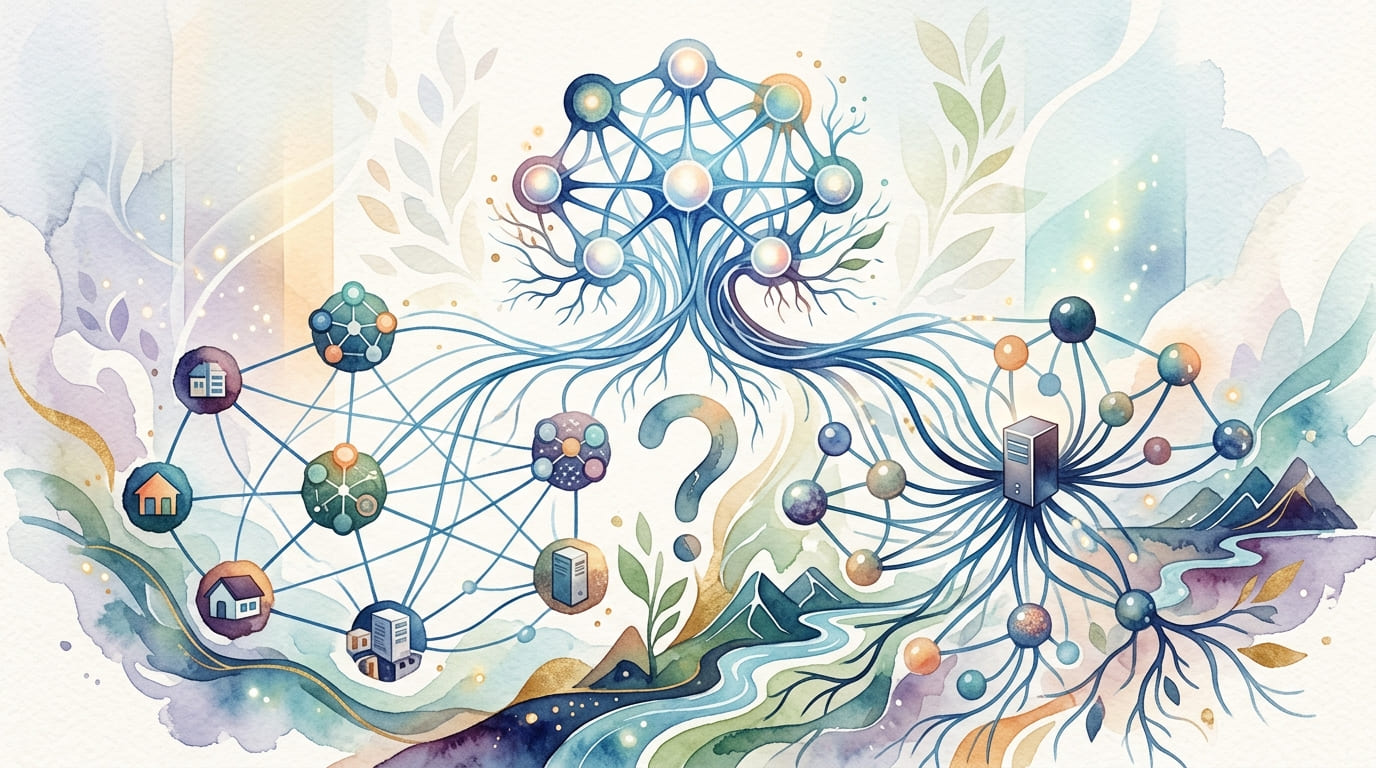
Matrix is based on a federated communication model, meaning that multiple independent servers can communicate with each other while each retaining its autonomy. This model fundamentally differs from centralized platforms, where a single operator controls the entire infrastructure. Each Matrix server, called a "homeserver", is managed by a distinct entity: a company, an association, an individual, or even a government. Users registered on one homeserver can exchange messages with users on another, in the same way that email allows a Gmail user to communicate with a Proton Mail user. This logic fully aligns with the spirit of the Matrix protocol, designed to promote interoperability and independence among participants.
The open federation protocol
The Matrix federation protocol is fully open and documented. Anyone with the necessary technical skills can deploy their own server and connect it to the global network. This protocol, called the "Server-Server API", defines the rules by which homeservers exchange events: messages, invitations, room updates. The specification is public, allowing anyone to verify how it works or develop an alternative implementation. Synapse, the reference server written in Python, coexists with Dendrite, a more recent implementation in Go, and Conduit, written in Rust. This diversity of implementations strengthens network resilience and prevents a single actor from monopolizing technical development, a core principle of open source software support and the open source community.
Data replication across servers
A fundamental aspect of Matrix architecture lies in how data is replicated. When you participate in a chat room, each homeserver involved in the conversation keeps a full copy of the history. If one server goes down, the others continue to operate and serve messages to participants. This replication mechanism ensures a level of resilience that centralized systems cannot offer. However, it also raises questions about data protection, since deleting a message on your server does not guarantee its removal from other participants' servers.
Comparison with centralized and P2P systems
To assess whether Matrix is truly decentralized, it is useful to position it relative to the two other major network architecture models. Centralized systems concentrate all data and logic on servers controlled by a single entity. Peer-to-peer systems, on the other hand, completely eliminate the notion of a central server. Matrix sits between these two extremes, which is both its strength and its source of complexity.
Differences with WhatsApp and Signal
WhatsApp and Signal both rely on a centralized architecture. Your messages pass through Meta’s servers for WhatsApp, and through the Signal Foundation’s servers for Signal. Even though Signal encrypts messages end-to-end and minimizes collected metadata, you remain dependent on their infrastructure to deliver your communications. If Signal decides to shut down its servers, the service disappears. With Matrix, the situation is fundamentally different: you can choose your homeserver or host one yourself. End-to-end encryption is also available via the Megolm protocol, meaning Matrix offers a level of privacy comparable to Signal while adding infrastructure sovereignty. Solutions like Twake chat, developed by LINAGORA as an open source company, illustrate this approach by making the experience more accessible. The trade-off is increased complexity for the end user, who must understand the concept of a homeserver and sometimes manage encryption keys.
Matrix vs pure Peer-to-Peer networks
Pure peer-to-peer protocols, such as Briar or certain IPFS-based implementations, completely eliminate the need for servers. Each device communicates directly with others. This model provides maximum decentralization, but it comes with significant practical drawbacks: messages can only be delivered when both devices are online at the same time, battery and bandwidth consumption increase considerably, and synchronization across multiple devices becomes a major technical challenge. Matrix takes a pragmatic approach by retaining servers to ensure message persistence and service availability, while distributing control of these servers among multiple independent operators.
User autonomy and self-hosting
One of the strongest arguments in favor of Matrix decentralization is the ability for each user or organization to deploy their own homeserver. This self-hosting capability provides a level of autonomy that very few communication platforms offer. You can install Synapse or Dendrite on a personal server, a VPS, or even a Raspberry Pi, then join the global federated network while maintaining full control over your data. Several European governments have already adopted this approach: the German Bundeswehr uses an internal Matrix instance, and the French government has developed Tchap, an application based on the Matrix protocol hosted on state servers. For organizations concerned with regulatory compliance, particularly with GDPR, this self-hosting capability represents a decisive advantage. You decide where your data is stored, who can access it, and under what retention policies it is managed. This technical sovereignty is the concrete foundation of the decentralization promised by Matrix.
Current limitations of Matrix decentralization
Despite an architecture designed for decentralization, several practical factors nuance this assessment. The reality of the Matrix network as it exists today includes points of centralization that deserve attention, especially if you plan to adopt this protocol for sensitive use cases.
Dependence on identity servers
Matrix uses identity servers to allow users to find each other via email addresses or phone numbers. The default identity server, vector.im, is operated by Element, the company most heavily involved in the Matrix ecosystem. This creates a functional centralization point: if you want to find a contact by email, the request likely goes through this single server. Efforts are underway to decentralize this discovery function, but as of now, it remains a weak point in the architecture. You can deploy your own identity server, but its usefulness depends on how many users are registered on it, creating a network effect that favors the most popular servers.
User concentration on Matrix.org
The matrix.org homeserver, operated by the Matrix.org Foundation, hosts a very significant proportion of the network’s users. This concentration creates a structural issue: if this server experiences an outage, a large portion of the network is affected. Popular rooms often have a majority of participants registered on matrix.org, making this server almost essential for many conversations to function properly. This situation mirrors the historical issue of email, where Gmail holds a disproportionate share of accounts, effectively weakening the theoretical decentralization of the SMTP protocol. For Matrix decentralization to become a tangible reality, more organizations and individuals would need to host their own servers and encourage their communities to join them.
Governance and protocol development
Decentralization is not limited to technology, it also concerns how the protocol is governed, developed, and funded. A technically decentralized protocol whose specification is controlled by a single entity cannot be considered fully decentralized. Matrix has taken significant steps to address this concern, although questions remain.
The role of the Matrix.org Foundation
The Matrix.org Foundation, established in 2019 as a UK-based non-profit organization, is the steward of the protocol specification. Its mission is to ensure that Matrix remains an open standard, not controlled by a single commercial entity. The foundation oversees the specification proposal process (MSC, for Matrix Spec Change), which is open to external contributions. In practice, much of the development is carried out by Element, which employs most of the core developers. This financial and human dependence on a single company represents a risk for protocol governance. If Element were to disappear or shift its priorities, the pace of Matrix development could be significantly affected. However, the foundation is working to diversify its funding sources and expand its contributor base to mitigate this risk.
The future: towards full decentralization with P2P Matrix
The P2P Matrix project represents the most ambitious long-term vision of the ecosystem. The goal is to allow each device to function as its own homeserver, thus eliminating the need for intermediary servers. Functional prototypes have already been demonstrated, including mobile applications capable of communicating directly with each other via Bluetooth or local networks. This evolution would address several current limitations: user concentration on a few servers, dependence on identity servers, and the need for technical skills to self-host a server. This approach fully aligns with the philosophy of the open source service and the Matrix protocol, pushing even further the decentralization logic driven by the open source community. The path toward this vision remains long and filled with technical challenges, particularly regarding energy consumption on mobile devices and reliable data synchronization across endpoints.
Matrix is therefore decentralized in its design and protocol, but partially centralized in its day-to-day reality. Federation works, self-hosting is accessible, and the specification remains open. The remaining points of centralization, such as the dominance of matrix.org and dependence on Element, are identified and actively being addressed. If you are looking for a communication platform that gives you real control over your data while remaining interoperable, Matrix is currently the most mature option, often adopted as an open source solution by many organizations and every open source company committed to digital sovereignty. Your choice to host your own server or join a community homeserver will directly contribute to strengthening this decentralization. Each new independent server makes the network more resilient and more faithful to its founding promise, particularly with tools like Twake chat : the Matrix client that facilitate adoption and open source software support.

