


 Français
Infrastructure modernization has become a central challenge for organizations facing accelerated development cycles and increasing demands for availability and performance. In this context, containerization and container orchestration are establishing themselves as structural levers to evolve IT infrastructures.
By combining technologies such as Docker and Kubernetes with DevOps practices, organizations can transform their technical environments to gain agility, resilience, and operational efficiency.
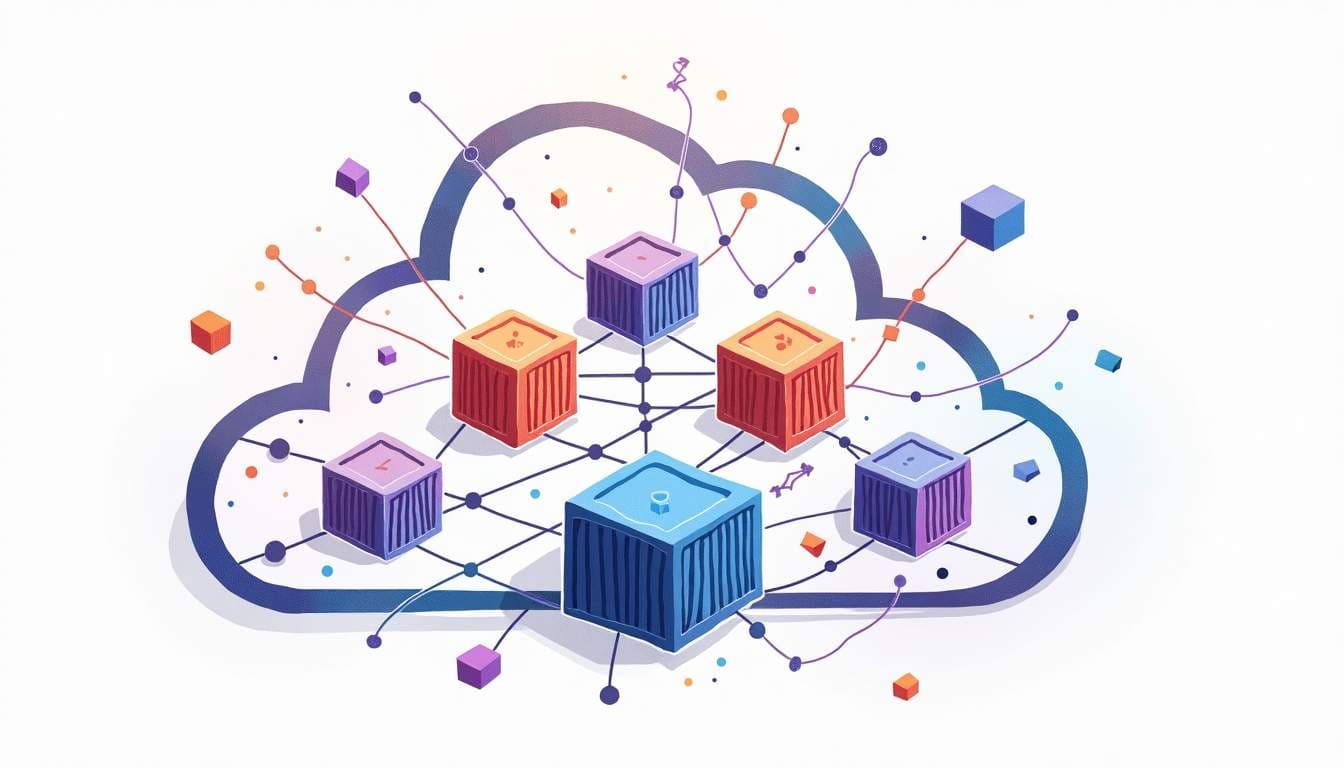
Containerization: a foundation for infrastructure modernization
Containerization consists of encapsulating an application and its dependencies in a lightweight, portable container. This approach guarantees consistency across development, testing, and production environments, thereby reducing deployment‑related risks.
With Docker, teams can standardize their applications and simplify their operation, which constitutes a key step in infrastructure modernization.
Container orchestration: scaling up
While containerization provides portability, container orchestration enables the management of complex, large‑scale environments. It automates deployment, scaling, and the lifecycle management of containerized applications.
Kubernetes as the de‑facto standard
Kubernetes has become the reference for container orchestration. It offers advanced mechanisms for high availability, scaling, and resilience, while integrating smoothly into cloud, hybrid, or On‑Premise environments.
Adopted within an Open Source approach, Kubernetes allows the building of flexible, long‑lasting infrastructures that are vendor‑agnostic.
Containerization and DevOps: an inseparable duo
Containerization naturally fits a DevOps approach, which aims to bring development and operations teams closer together. Containers facilitate automation of delivery pipelines and strengthen collaboration between teams.
By integrating DevOps practices into containerized infrastructures, organizations improve release frequency while maintaining a high level of quality and security.
Tangible benefits for the IT infrastructure
Adopting containerization and container orchestration delivers concrete advantages:
- Greater agility in application deployment;
- Optimized resource utilization;
- Improved resilience and service availability;
- Accelerated development and production cycles.
These benefits directly contribute to the modernization of the IT infrastructure.
The importance of support in containerization projects
Implementing technologies such as Docker and Kubernetes requires solid expertise to ensure architectural consistency, environment security, and service continuity. Beyond the initial deployment, open‑source support plays a crucial role in operating, maintaining, and evolving container platforms over time. Open‑source services accompany organizations at every stage, providing consulting, technical expertise, and Open Source support to secure usage and sustain infrastructure modernization.
Conclusion
Containerization and container orchestration are today’s pillars of infrastructure modernization. By relying on proven technologies like Docker and Kubernetes, and on DevOps practices, organizations can build infrastructures that are more agile, resilient, and scalable.
Integrated into an Open Source approach and supported by expert guidance, these technologies enable a sustainable evolution of the IT infrastructure, in line with the vision championed by LINAGORA.

